
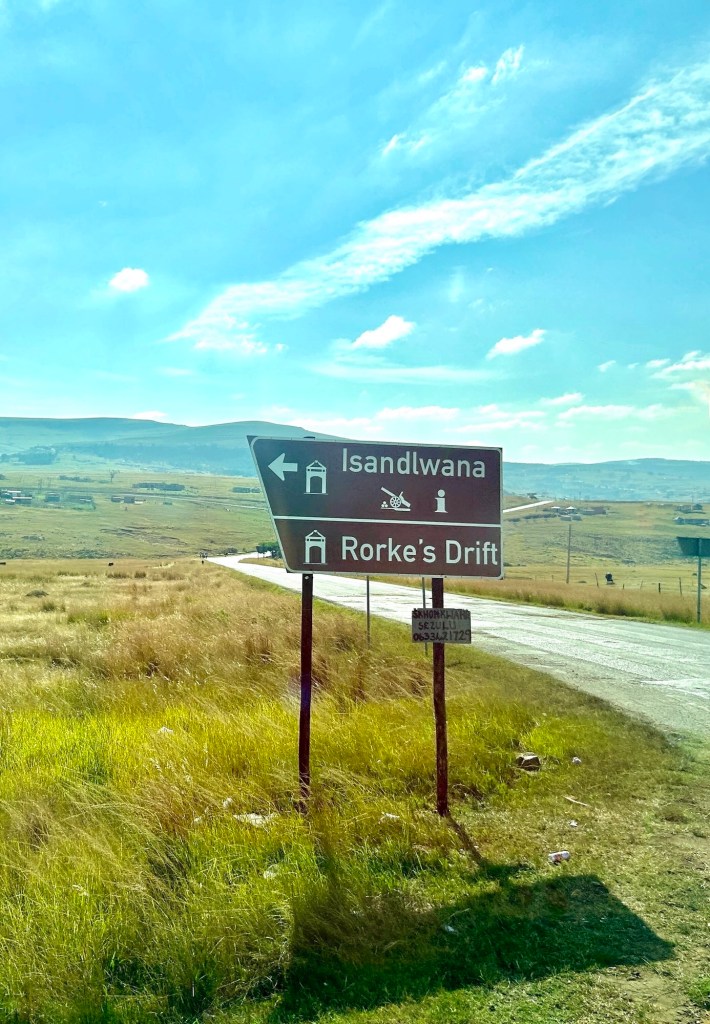
One year ago today I was in South Africa traveling to the Isandlwana Battlefield. In January 1879 it was the site of the first major encounter of the Anglo-Zulu War.
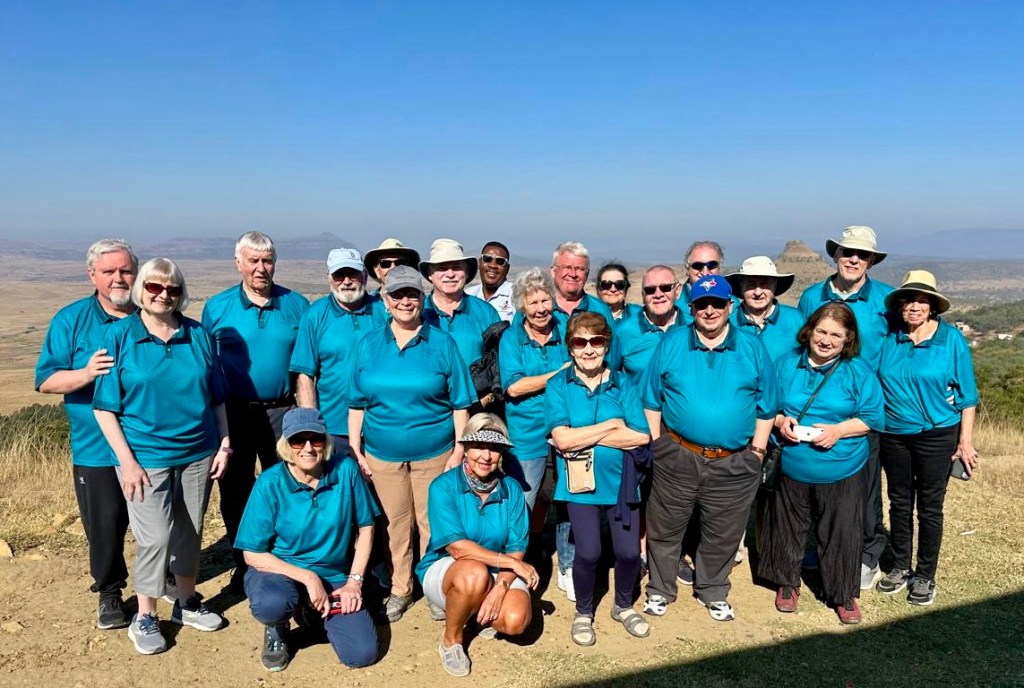
This trip was part of a group tour with the graduates of the 1973 Nottingham University Mining Dept. It was a 50 year anniversary/reunion for them. Ten guys and their wives including my husband Chris and me.
To be honest when I read the itinerary included this stop, I thought it was really a guy thing. I was not interested, but it was their celebration and after all they were all guys, therefore it was a stop of interest.
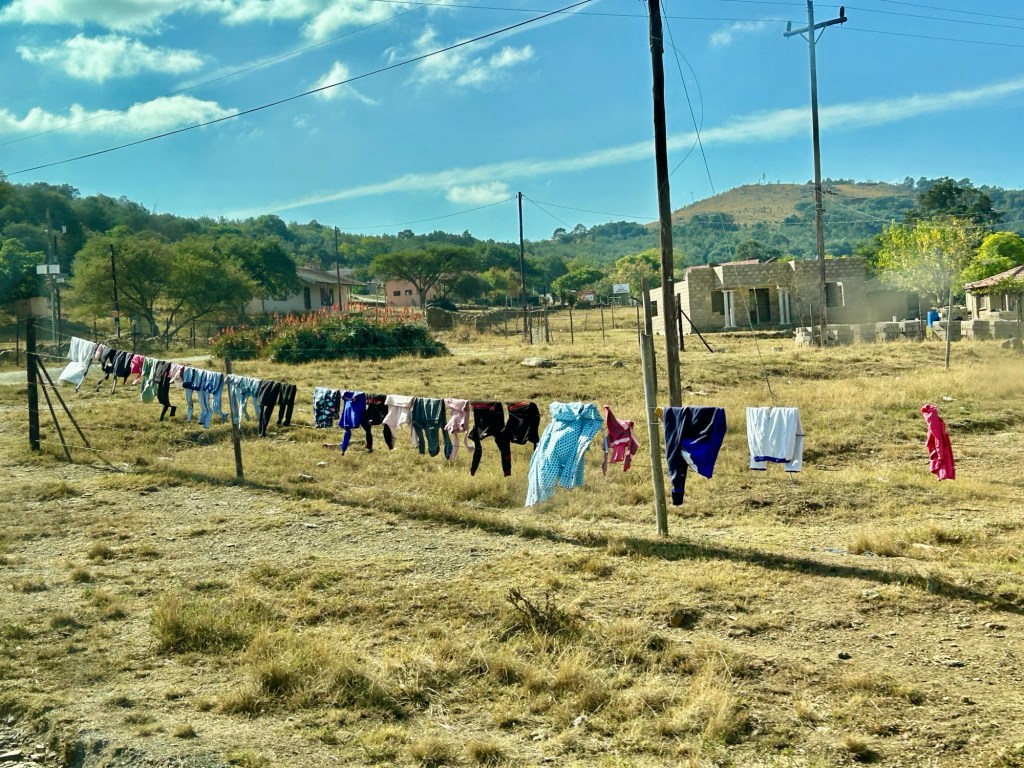
We started the journey on the seaside in Durban and travelled 5+ hours by coach to Isandlwana. The countryside was beautiful and I took many pictures of the villages and locals along the way.
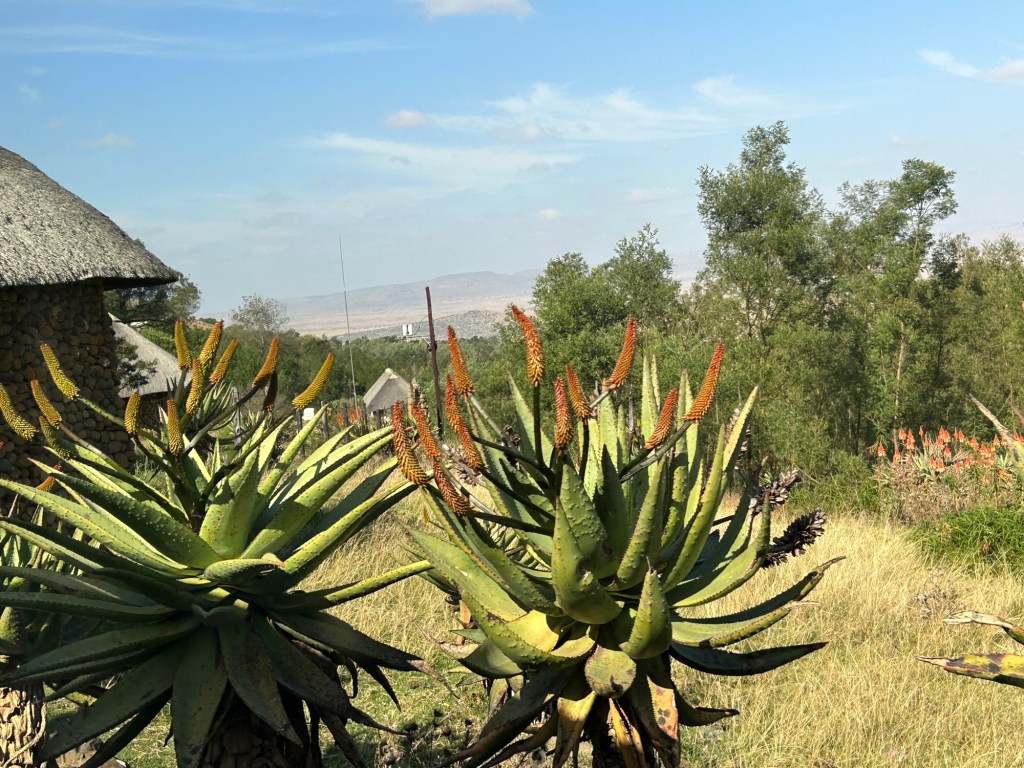
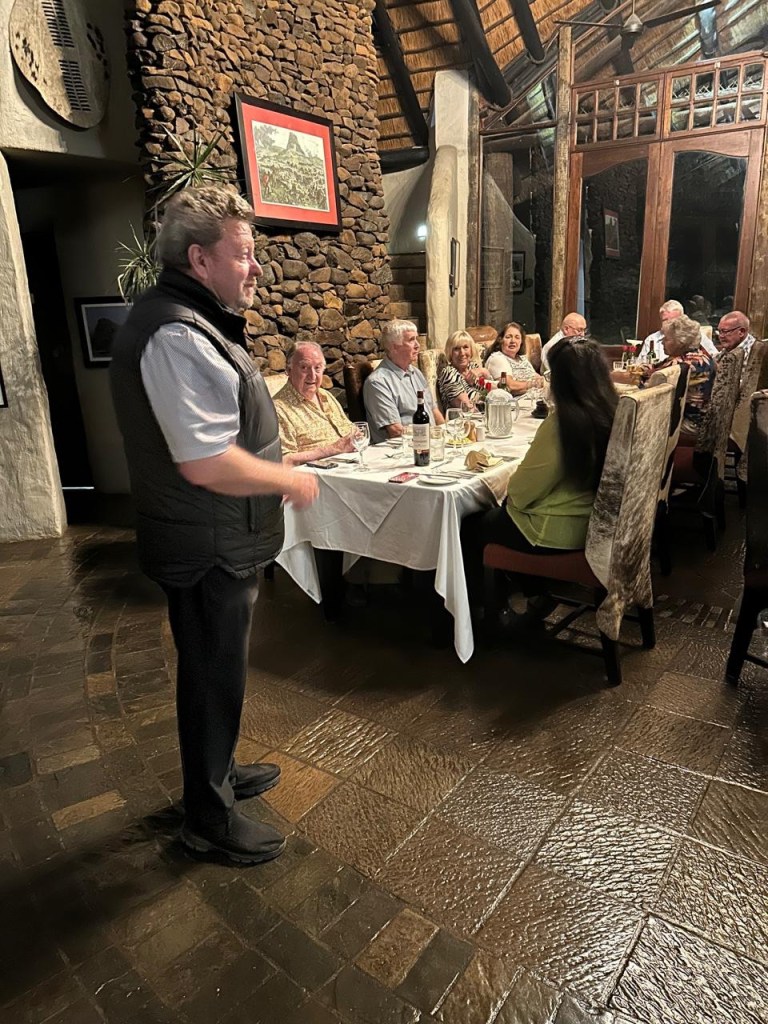
We stayed at the Isandlwana Lodge. The lodge is cut into the rockface of Nyoni Rock with an expansive view of the mountain and battlefield below. The entire lodge is shaped like a shield, and built with rock and thatch to resemble the native huts. Per the Lodge’s website, the lodge was opened in 1999 and was formally opened by Prince Mangosuthu Buthelezi, a direct descendant of King Shaka.
Just the beauty of the lodge and the serenity of the surrounding area made this a magical place. Hard to believe this magical serene space witnessed a brutal horrific battle.
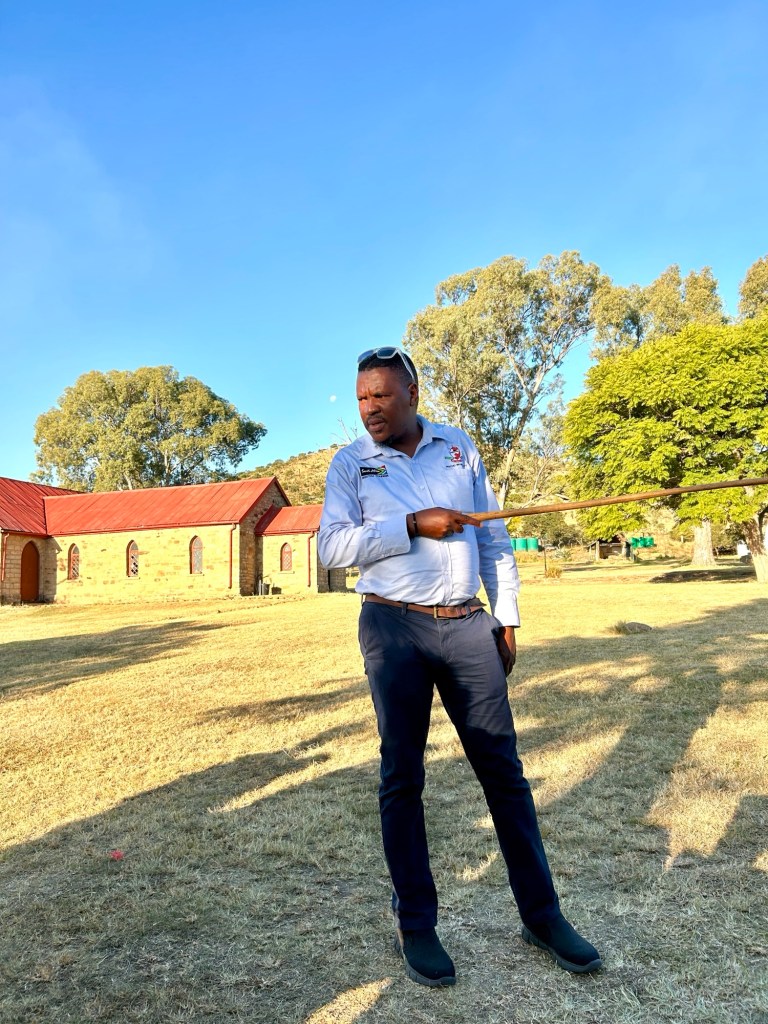
The whole sordid story is too long and complicated to recount here but for three days we had the most magnificent guide, Thulani, who told the story in such captivating detail that I wish I could have recorded the entire visit.
In a nutshell it goes like this: 1) British Empire decides they want Zululand; 2) the Zulu King doesn’t agree; 3) war ensues; 4) over confident British commander camps at Isandlwana; 5) Zulu King and his forces overpowered the armed British with only spears and shields; 6) a majority of the 1700 British troops were killed; 7) after a series of battles over the next several months the British gain control of Zululand; 8) in 1887, Zululand was declared British territory.
In walking the battlefield, I was surprised to see most all of the monuments were to British officers and troops. Well, makes sense as most of them were erected by the British after they took control. However one would have thought in recent years there would be monuments to honor the Zulu warriors who fought for their land.
I asked Thulani and he told me that a monument had been dedicated to the Zulu’s in 1999. It was commissioned by the KwaZulu Monuments Council to commemorate the Zulu army involved in the battle and it was unveiled on its 120th anniversary.
It was a large replica of a necklace of valour worn by deserving Zulu warriors. Just two months before our visit the monument was cut into pieces and stolen. A small section that was left had been moved to the porch area of the small museum.

So that’s the story. One year ago I surprised myself by a visit to a place I thought I had no interest in seeing. Not only was I in awe of the beauty of the lodge and surrounding landscape, I also learned about the sad history of the land.






 Emyloom ~ Words Woven Within My Heart